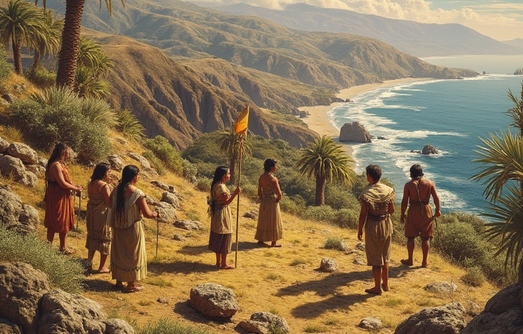
 CALIFORNIA STATE - Long before Spanish explorers and gold rushers arrived, California was home to a vibrant mosaic of indigenous cultures. These diverse communities, with their rich languages and traditions, had their own names for the lands they inhabited, names that reflected their deep connection to the natural world and their unique cultural identities. Let's explore the history of California before it became the "Golden State," uncovering the names and stories of its original inhabitants.
Before It Was California: The Indigenous Names for the Golden State
A Land of Many Names
The name "California" itself has a fascinating origin. It's believed to have come from a 16th-century Spanish romance novel, "Las Sergas de Esplandián," by Garci Rodríguez de Montalvo. The novel describes a mythical island paradise called California, ruled by Queen Calafia. When Spanish explorers reached the Baja California peninsula, they mistakenly believed it to be an island and applied the fictional name to the region.
However, the indigenous peoples of California had their own names for the lands they inhabited, names that often reflected the unique characteristics of their environment and their cultural practices.
The Miwok and the "Big Gaping Mouth"
The Miwok people, who primarily resided in the Sierra Nevada foothills and the San Francisco Bay Area, referred to their land as "Yo-sem-i-ti," meaning "big gaping mouth." This name vividly captures the awe-inspiring landscape of Yosemite Valley, with its towering granite cliffs and cascading waterfalls. The Miwok had a deep respect for the natural world and believed that the valley was inhabited by spirits.
The Chumash and the "Place of the Shells"
The Chumash people lived along the central and southern California coast, and their territory included the Channel Islands. They were skilled seafarers and relied on the ocean for sustenance. They called the Santa Cruz Island "Limuw," meaning "place of the shells." This name reflects the abundance of shellfish found on the island's shores, which were a vital part of the Chumash diet.
The Tongva and the "Land of the Sun"
The Tongva people were the original inhabitants of the Los Angeles Basin. They called the area "Tovangar," which is believed to mean "land of the sun." This name is fitting, given the region's sunny climate. The Tongva were known for their sophisticated social structure and their intricate basketry and pottery.
The Hupa and the "Deep Valley"
The Hupa people lived in the northwestern part of California, along the Trinity River. They called their homeland "Natinook," meaning "deep valley." The Hupa were known for their elaborate ceremonies and their distinctive redwood plank houses.
Honoring the Past, Embracing the Present
These are just a few examples of the many indigenous names for California. Each name tells a story about the people who lived there and their relationship with the land. Recognizing and honoring these original names is an important step towards understanding the rich history and cultural diversity of California.
Today, many Native Californian tribes are working to revitalize their languages and cultures. By learning about their history and supporting their efforts, we can help ensure that their stories continue to be told for generations to come.