

 HAWAII - Unlike many U.S. states with names derived from colonial figures or mispronounced Indigenous terms, the name Hawaiʻi is an ancestral one. It is rooted in the Proto-Polynesian word Sawaiki, which translates to "Homeland." For the Kanaka Maoli (Native Hawaiians), the islands are not merely a vacation destination but a living genealogy—Pae ʻAina o Hawaiʻi—a chain of islands born from the union of the earth and sky.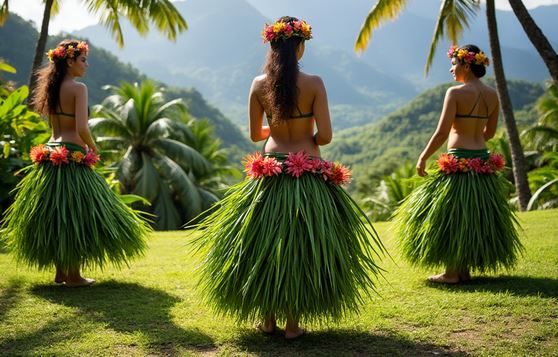
Long before European contact in 1778, the islands were governed by a sophisticated system of land management known as Ahupuaʻa, ensuring that resources from the mountains to the sea were used sustainably.
The Origin of the Name
While the exact translation of "Hawaiʻi" is debated, it is deeply tied to the concepts of origin and breath:
- Hā: This means "Breath," specifically the breath of life.
- Wai: This is the word for "Fresh Water," the most sacred resource in the islands.
- ʻI: This denotes "Supreme" or "Divine."
Together, the name evokes a place of divine life and water. Historically, the name referred specifically to the largest island (The Big Island) before King Kamehameha I unified the entire chain under the Kingdom of Hawaiʻi.
Individual Island Names and Identities
Each island in the chain has its own traditional name and a specific "poetic" or directional identity:
- Oʻahu: Often called "The Gathering Place." Historically, it was the center of trade and communication between the islands.
- Maui: Named after the legendary demigod Maui, who is said to have pulled the islands from the sea with his magic fishhook.
- Kauaʻi: Traditionally known as "The Garden Isle," its name is ancient and its meaning is lost to time, though some associate it with "A Place of Abundance."
- Molokaʻi: Known as "Molokaʻi Nui a Hina," or "Great Molokaʻi of Hina," honoring the goddess Hina, the mother of the island.
- Lānaʻi: Often translated as "Day of Conquest" or "The Veranda," referring to its physical shape and history.
Significant Indigenous Place Names
In Hawaiʻi, place names are rarely arbitrary; they tell the story of the land's function or its mythological history. Honolulu, the state capital, means "Sheltered Bay." The famous Waikīkī translates to "Spouting Water," referencing the many wetlands and springs that once fed the area.
The highest peak in the islands, Mauna Kea, means "White Mountain," a reference to the snow that frequently caps its summit. Its counterpart, Mauna Loa, means "Long Mountain." In the south, the active volcanic region of Kīlauea means "Spewing" or "Much Spreading," perfectly describing the lava flows that have continuously shaped the island of Hawaiʻi for millennia.
A Living Kingdom and Culture
Today, the Hawaiian language (ʻŌlelo Hawaiʻi) is an official language of the state, and there is a powerful movement to restore original place names that were changed or simplified during the 20th century. Native Hawaiians continue to maintain their connection to the land through traditional navigation, hula, and the restoration of ancient fishponds.
By recognizing the Pae ʻAina o Hawaiʻi, we acknowledge a sovereign history and a cultural legacy that views the land (ʻĀina) as an elder sibling to be respected and cared for.
