

 NEW MEXICO - The name "New Mexico" (Nuevo México) was applied by Spanish explorers who hoped the region would yield the same riches as the Aztec Empire in Mexico. However, New Mexico is home to one of the oldest continuous cultural landscapes in North America. Long before the Spanish arrived, the high deserts and river valleys were known by the names given by the Pueblo nations, the Diné (Navajo), and various Apache (Indé) tribes.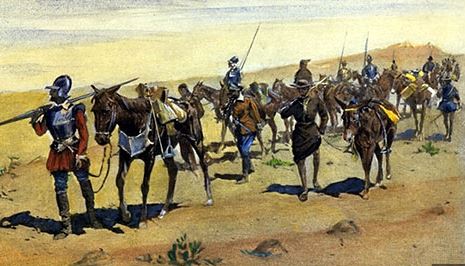
For these people, the land is a sacred map of emergence sites, migration paths, and ancestral dwellings that have been inhabited for over a thousand years.
A Tapestry of Sovereign Nations
The Rio Grande Valley, the high plateaus of the northwest, and the rugged mountains of the south define New Mexico’s geography. This diverse terrain is home to 23 federally recognized tribes:
- The Pueblo Nations: There are 19 Pueblos in New Mexico, each a sovereign nation. Their language groups categorize them: Tewa, Tiwa, Towa, Keres, and Zuni. Each Pueblo has its own specific name for its village and the surrounding ancestral lands.
- Diné Bikéyah (Navajo Nation): The northwestern portion of the state is part of the Navajo heartland, bounded by sacred mountains that define the Diné universe.
- The Apache (Indé): The Jicarilla Apache in the north and the Mescalero Apache in the south have deep ancestral ties to the mountains and plains, viewing the land as a source of spiritual strength and healing.
Regional and Cultural Designations
Because of the immense linguistic diversity in the region, there is no single Indigenous name for "New Mexico." Instead, names are local and deeply descriptive:
- The Rio Grande: To the Tewa-speaking Pueblos, the Rio Grande is known as P'osoge, or "Big River." It is the lifeblood of the Pueblo world.
- The Four Sacred Mountains: For the Diné, the land is defined by four peaks. In New Mexico, Tsoodzil (Mount Taylor) marks the southern boundary, known as the "Turquoise Mountain."
- The Middle Place: The Zuni (A:shiwi) refer to their homeland as Halona:wa, meaning "The Middle Place," which they believe is the center of the world.
Significant Indigenous Place Names
The linguistic legacy of New Mexico's original inhabitants is preserved in the names of its most famous landmarks. Albuquerque, for example, is situated on Tiwa lands; the Sandia Pueblo people call the area Be-no-gu-ly-oo, referring to the "Green Reeds" along the river.
The city of Santa Fe was built on the site of an ancient Tewa village called Ogapoge, which means "White Shell Water Place." The Sandia Mountains, which tower over the central part of the state, are known to the Tiwa as Tshis-pa, or "Watermelon Mountain" (though this interpretation is debated, it remains a common reference).
In the west, the massive sandstone formation known as El Morro is called A'ts'ina ("Place of Writings on the Rock") by the Zuni. Further north, the spectacular Chaco Canyon is known to the Hopi as Yupköyvi and is revered as a site of ancestral power by both the Pueblo and Diné peoples.
A Living Heritage
New Mexico is unique in the United States for the degree to which its Indigenous cultures have remained rooted in their original village sites. The Pueblos, the Diné, and the Apache nations continue to practice their ancient ceremonies, speak their native languages, and govern their lands with a focus on long-term stewardship.
By recognizing these original names—from The Middle Place to the White Shell Water Place—we acknowledge that New Mexico's "enchantment" is not a modern marketing term, but a reflection of a sacred relationship with the land that has endured for millennia.
