 COLORADO STATE - The name "Colorado" is a Spanish word meaning "ruddy" or "red-colored," originally used to describe the silt-filled waters of the Colorado River. However, for thousands of years before the first Spanish explorers arrived, the peaks, canyons, and plains of this region were known by names rooted in the languages of the Ute (Nuuchiu), Cheyenne (Tsitsistas), Arapaho (Hinono'eino), Navajo (Diné), and Apache (Ndee).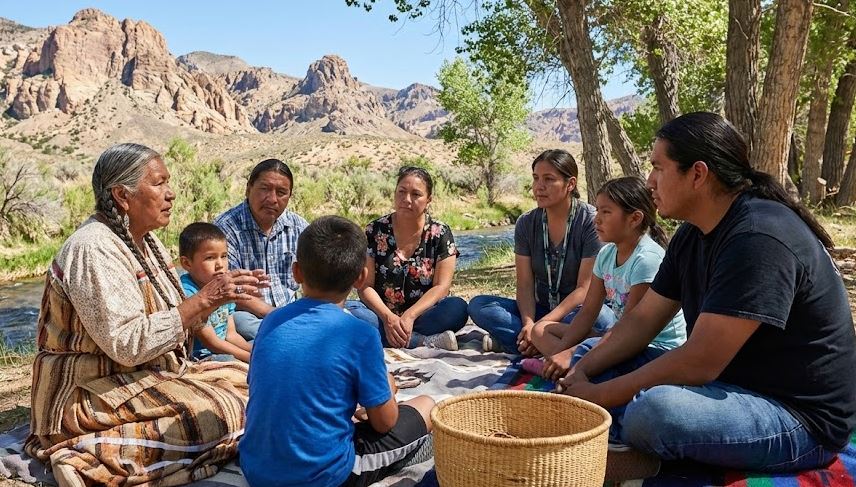
To these nations, the landscape was not a series of 14,000-foot peaks to be conquered, but a sacred geography of "shining mountains" and life-sustaining prairies.
A Vertical World of Diverse Nations
Colorado's geography is split between the towering Rocky Mountains and the vast High Plains. This dramatic shift in elevation created two distinct cultural worlds:
- The Nuuchiu (Ute): As the oldest continuous residents of Colorado, the Ute people inhabited the mountain valleys and high plateaus. Their name for themselves, Nuuchiu, means "The People." They moved seasonally, following the wildlife and the ripening of plants across the "Blue Mountains."
- The Tsitsistas (Cheyenne) and Hinono'eino (Arapaho) dominated the eastern plains. They saw the mountains as sacred boundaries and sources of water. They were nomadic hunters who maintained a deep spiritual connection to the grasslands.
- The Diné (Navajo) and Jicarilla Apache: The southern borders of Colorado are part of the ancestral homelands and migration routes of the Diné and Apache. The mountains of southern Colorado serve as vital boundary markers for their traditional universe.
Regional and Cultural Designations
Because of the State extreme geography, Indigenous groups identified the land by its most prominent features:
- The Shining Mountains: Many tribes referred to the snow-capped Rockies by names that translated as "Shining" or "White" mountains, due to how the sun reflected off the snow and granite.
- The Front Range: To the Arapaho, the area where the plains meet the mountains was a primary campsite and a place of trade. They had specific names for nearly every creek and canyon along the range.
- Dinétah: The southwestern corner of the state is considered part of the Navajo's ancestral homeland, a region of emergence and ancient history.
Significant Indigenous Place Names
The linguistic landscape of Colorado is still visible if you know where to look. Pikes Peak, the State most famous mountain, is known to the Ute as Tava-ka-vi, or "Sun Mountain." The Arapaho called it Heey-otoyoo', meaning "Long Mountain."
The city of Denver sits on the traditional lands of the Cheyenne and Arapaho; the Arapaho called the confluence of the South Platte River and Cherry Creek Niineniiniicee, or "Tallow River." Further south, the San Luis Valley is a sacred landscape for many; the Tewa people call it Sipapu, referring to a place of emergence. The Mount of the Holy Cross was known to the Ute as a site of great spiritual power. At the same time, Mount Evans (recently renamed Mount Blue Sky) was a sacred site for the Arapaho and Cheyenne, who called the area Heey-otoyoo' in reference to the high, clear atmosphere.
A Living Connection
Today, Colorado is home to two federally recognized tribes—the Southern Ute and the Ute Mountain Ute—while many other nations maintain strong cultural and historical ties to the state. Indigenous perspectives are increasingly being integrated into the management of Colorado's public lands and the preservation of its natural wonders.
By recognizing these original names—from Sun Mountain to the Tallow River—we acknowledge that Colorado's history is far older than its statehood, written in the enduring languages of the "People of the Mountains."