 NORTH DAKOTA - When exploring the history of the Peace Garden State, the timeline begins in the far northeast corner, right at the Canadian border. The town of Pembina, established in 1797, is the oldest European settlement in North Dakota and predates the founding of most major cities in the Midwest.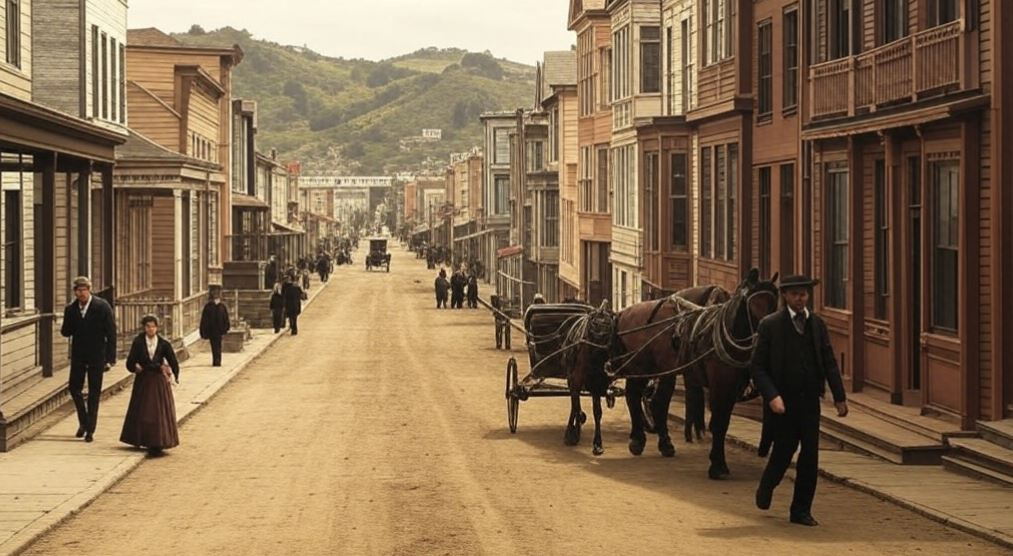
The Founding: 1797
Pembina’s origins are tied to the intense rivalry of the fur trade between the British and the French.
- The Trading Post: In 1797, Charles Chaboillez of the North West Company established a trading post at the confluence of the Red and Pembina rivers. This strategic location allowed traders to access the vast resources of the Red River Valley.
- The Selkirk Settlers: In 1812, the Earl of Selkirk attempted to establish the first permanent agricultural colony. These Scottish and Irish immigrants established Fort Daer at the Pembina site. While they faced immense hardship (including locusts and floods), their arrival marked the transition from a seasonal trading post to a permanent community.
Indigenous Roots
Long before the fur traders arrived, the Red River Valley was the domain of the Chippewa (Ojibwe), Cree, and Assiniboine peoples. The region is perhaps most famous as the birthplace of the Métis culture. The Métis, descendants of European traders and Indigenous women, developed a distinct society in the Pembina area. They were famous for their massive buffalo hunts and the invention of the Red River Cart, a two-wheeled wooden cart that became the primary vehicle of commerce on the northern plains. The "squeal" of these wooden carts could be heard for miles and defined the soundscape of early North Dakota.
A Technical Distinction: The 49th Parallel
Pembina’s history is unique because for decades, no one was quite sure which country it belonged to.
- The Border Survey: In 1818, the United States and Great Britain set the 49th parallel as the border. However, it wasn't until Major Stephen Long’s expedition in 1823 that the line was officially surveyed.
- The Result: The survey revealed that Pembina was just south of the line, placing it firmly in the United States. This prompted the British Hudson's Bay Company to move north, while the American influence solidified.
Settlement vs. Incorporation
Pembina holds almost every "first" in North Dakota history: the first trading post, the first school, the first church, and the first post office (1851). However, like many early settlements, it was not the first to grow into a major metropolis. The arrival of the Northern Pacific Railroad in the 1870s gave rise to cities such as Fargo (1871) and Bismarck (1872), which quickly eclipsed Pembina in population and political power. Nevertheless, Pembina remains the undisputed patriarch of North Dakota settlements.
 Pembina is the oldest settlement in North Dakota, founded as a fur trading post in 1797 by the North West Company. It was the site of the first agricultural colony (1812) and a center of Métis culture. Its location at the confluence of the Pembina and Red rivers made it a vital gateway to the Canadian Northwest. While railroad cities like Fargo developed in the late 1870s, Pembina holds the title of the earliest continuously inhabited city.
Sources
- State Historical Society of North Dakota. "Pembina State Museum: History."
- City of Pembina. "History of Pembina."
- Britannica. "North Dakota: History."
- National Park Service. "Red River Oxcart Trail."
- North Dakota Studies. "The Fur Trade and the Red River Carts."